September 13, 2026
Resellers: Deploy AI Lead Qualification in Under a Week
For resellers and agencies: AI lead qualification auto books meetings, updates CRMs, and tracks revenue server side. Deploy in under a week.
Resellers: Deploy AI Lead Qualification in Under a Week
AI lead qualification automates enrichment, scoring, and routing so reps get a prioritised, context-rich lead the moment it lands, not a delay that manual research typically takes. Done properly, it means faster contact, consistent priorities across the whole team, and automated meeting bookings or CRM updates when set up correctly. If you’re an agency or reseller weighing your options, a white-label agent platform with multi-tenant support and server-side revenue tracking is worth evaluating first.
TL;DR:
- Continuous data refresh and explainability are critical for maintaining trust and accuracy in AI lead qualification systems.
- Running AI alongside existing rules for 2 to 4 weeks allows for a proper evaluation of performance and helps prevent costly misclassification.
- Implementing thresholds and human review gates for high-value leads helps avoid overwhelming sales teams and improves routing quality.
- Agency resellers benefit from white-label platforms that support unlimited tenants, quick deployment, and server-side revenue tracking for attribution.
- The most immediate ROI comes from automation that books meetings and ensures consistent lead prioritization, reducing manual work and leakage.
Table of Contents
- What is AI lead qualification and how does it beat rule-based scoring?
- Which capabilities should you expect from an AI lead qualification tool?
- How do you implement AI lead qualification step by step?
- What pitfalls should you watch for once it’s live?
- Why does a white-label AI agent platform suit agencies and resellers?
- What does ROI actually look like in practice?
- A quick note from Agent on what actually moves the needle
- Ready to put agentic AI lead qualification to work?
- Where this article’s claims come from
- Sources
- FAQ
What is AI lead qualification and how does it beat rule-based scoring?
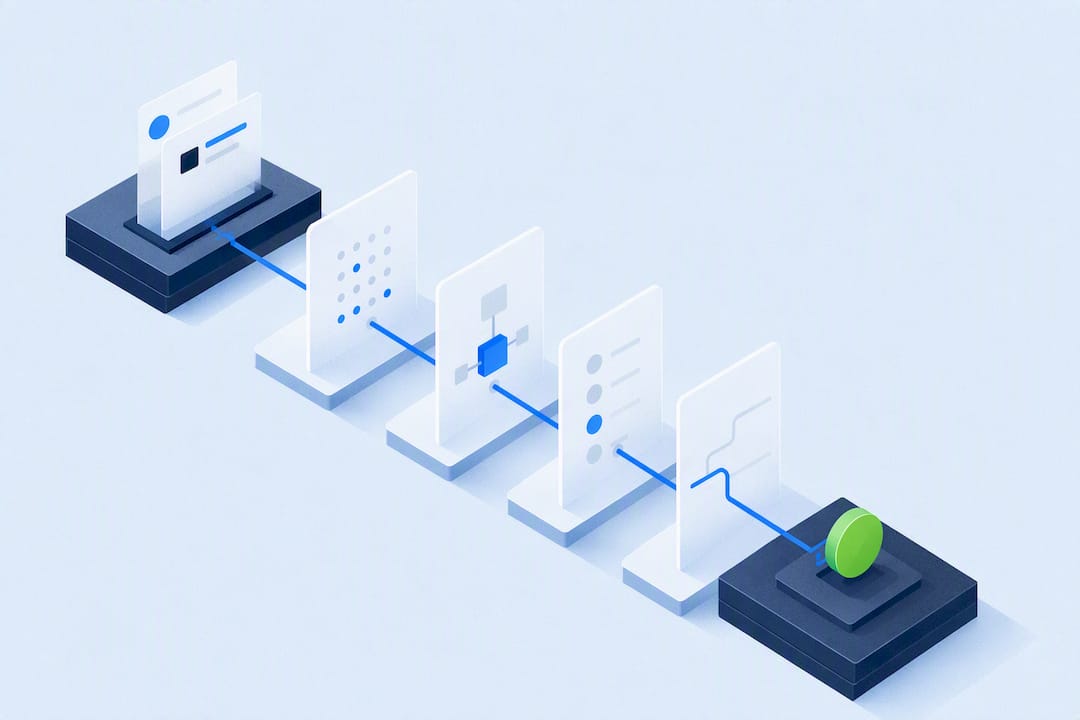
AI lead qualification runs on four steps: capture, enrich, score, and route. A lead fills out a form or messages your web chat, the system pulls in firmographic and behavioural data, a model scores intent, and the lead lands with the right rep or nurture sequence, often within seconds rather than the 15 to 30 minutes a manual qualification pass typically takes.
That speed isn’t the biggest shift. The real difference between this and old-school rule-based scoring is what happens after the score gets assigned.
Rule-based systems are reactive. You set a threshold (“job title contains ‘director’”, “visited pricing page twice”), a lead crosses it, and a human still has to notice and act. Agentic AI systems act on their own: they book the meeting, draft the follow-up message, and write the outcome back to your CRM without a rep lifting a finger.
The signals feeding these models have also broadened well past demographic fields:
- Firmographic data: company size, industry, revenue band, tech stack
- Behavioural data: page visits, email opens, content downloads, session duration
- Intent signals: search behaviour, competitor research, pricing page revisits
- Conversation content: what a lead actually says in chat or email, parsed for budget, timeline, and stated pain points
That last category is where agentic tools pull ahead of older scoring engines. A rule-based system can’t read a chat transcript and infer urgency. A conversational AI agent can, and it can act on that inference immediately.
Which capabilities should you expect from an AI lead qualification tool?
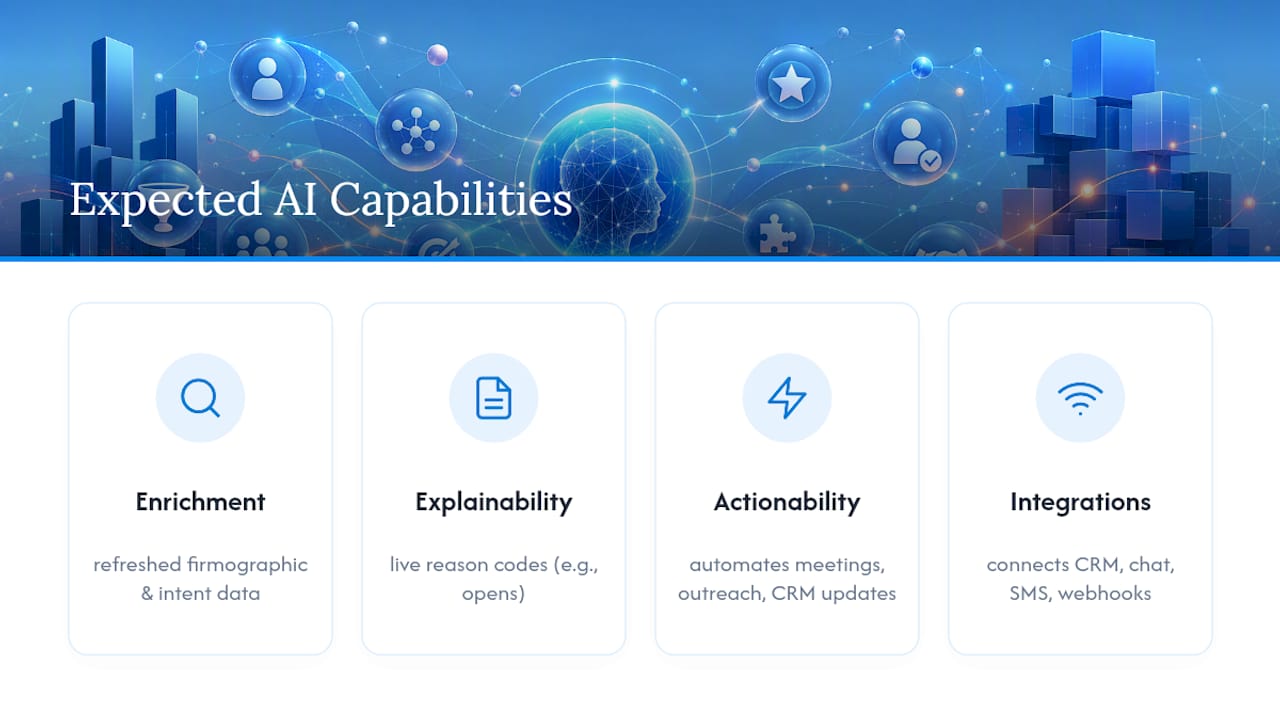
Not every platform marketed as “AI-powered” actually qualifies leads well. Four capabilities separate the tools that earn rep trust from the ones that get ignored after week two.
Breadth and freshness of enrichment. A model is only as good as the data it pulls from. Look for tools that refresh firmographic and intent data regularly rather than relying on a static snapshot taken when the lead first entered your system.
Explainability. This is the one most vendors underplay and most sales teams care about most. A score of “82” means nothing to a rep unless it comes with a reason code, something like “high (email opened 3x, visited pricing page, mentioned budget in chat)”. Explainable scoring drives adoption because reps won’t act on a number they don’t understand or trust.
Actionability. The best platforms don’t stop at scoring. They book meetings, draft outbound messages, and update CRM fields automatically, turning a scoring engine into something closer to a digital SDR.
Integration surface. Check how many channels and systems the tool actually connects to: your CRM, web chat, SMS, WhatsApp, webhooks, and your analytics stack. A tool that only integrates with one CRM and no messaging channels will create more manual work, not less.
Pro Tip: Ask any vendor to show you a live reason code before you sign anything. If they can’t produce one on the spot, the explainability claim in their pitch deck is probably aspirational.
How do you implement AI lead qualification step by step?
Rolling out AI lead qualification isn’t a flip-the-switch project. It’s a staged process, and skipping stages is the single biggest reason pilots stall.
- Prepare your data and define your ideal customer profile. Pull your closed-won deals from the last 12 to 24 months and map the signals that preceded them. Without this baseline, your model has nothing to learn from.
- Connect your capture points. Wire up web forms, chat widgets, messaging channels, and your CRM so enrichment and scoring happen the moment a lead arrives, not hours later during a batch sync.
- Set up writebacks and booking flows. Decide which actions the AI can trigger automatically (CRM field updates, calendar bookings) and which still need a human sign-off.
- Run a parallel pilot for 2 to 4 weeks. Let the AI score leads alongside your existing rules without switching off the old system. HubSpot’s own AI scoring workflow recommends a defined evaluation window before you touch scoring criteria, and a comparable parallel-run period is standard practice across most vendor implementations. Watch conversion rates, time to contact, and how often reps override the AI’s priority calls.
- Set operational controls before full rollout. Define human review thresholds for high-value accounts, agree on a retraining cadence, and document who owns data governance and model oversight.
Pro Tip: Don’t switch off your legacy rules on day one of the pilot. Running both systems side by side for a month gives you a genuine before-and-after comparison instead of a leap of faith.
What pitfalls should you watch for once it’s live?
Four failure modes account for most AI lead qualification disappointments, and all four are fixable if you catch them early.
- Data quality gaps. A model fed incomplete or outdated CRM records produces confidently wrong scores. Audit your data hygiene before you audit the model.
- ICP drift. Your ideal customer profile changes as your product and market shift, but the model won’t know that unless you retrain it. Left unchecked, this quietly degrades score accuracy over months.
- The speed trap. Routing too many “qualified” leads too fast overwhelms SDRs with volume that doesn’t convert, and it burns team morale. Raise thresholds for high-value accounts and add a human review gate for anything above a certain deal size.
- Compliance exposure. Automated scoring and outreach touch consent and data-handling rules. Build review checkpoints into your workflow rather than treating compliance as an afterthought.
Track four numbers to keep the model honest: conversion lift versus your pre-AI baseline, time to first contact, the false-positive rate on “qualified” leads that never convert, and routing accuracy against the rep who actually closes the deal. Feeding closed-won and closed-lost outcomes back into the model on a regular cadence is what keeps scores from going stale, a practice consistent with how leading scoring platforms handle continuous retraining.
Why does a white-label AI agent platform suit agencies and resellers?
If you’re an agency or consultancy reselling lead qualification as a service, the calculus is different from a single in-house sales team’s. You need the tool to disappear behind your own brand, and you need to stand up new clients fast without engineering overhead.
A white-label agent platform maps to that need in a few concrete ways:
- Unlimited tenant creation lets you spin up a separate branded instance for every client without licensing bottlenecks.
- Custom domain and branding controls mean your clients see your agency’s name, not a third-party logo, on every interaction.
- Quick deployment, often inside a week, matters when a client wants to see results before their first invoice is due.
- Server-side revenue tracking gives you attribution data you can show clients as proof the agent is actually generating pipeline.
The white-label approach makes the most sense when your business model depends on reselling under your own brand across multiple clients. If you’re running a single internal sales team with no reseller ambitions, a straightforward marketplace tool or managed service might suit you better. But for agencies, consultancies, and SaaS resellers building a recurring revenue line, the tenanting and branding controls are the whole point.
What does ROI actually look like in practice?
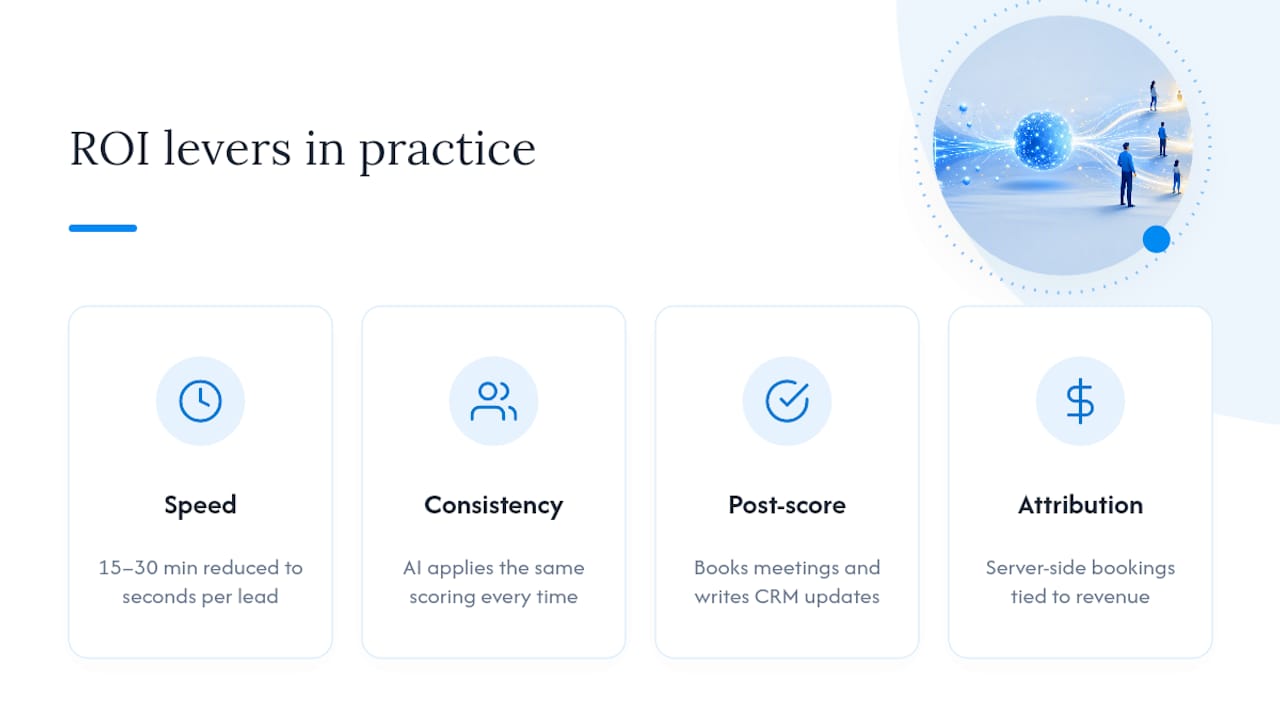
The clearest ROI signal in AI lead qualification isn’t a single flashy metric. It’s the compounding effect of faster contact and better prioritisation across hundreds of leads a month.
Consider a mid-sized marketing agency running lead gen for a handful of clients. Before automation, a rep manually reviewed each inbound lead, checked the company website, guessed at intent, and queued up a call. That process ate 15 to 30 minutes per lead, and by the time contact happened, the prospect’s interest had often cooled. Automated qualification compresses that entire research step to a matter of seconds, which means the first outreach lands while the lead is still actively comparing options.
The second lever is consistency. A rep having a slow day scores leads differently than one who’s sharp and caffeinated. An AI model applies the same criteria every time, which matters most for teams juggling dozens of small clients with different ICPs, a common scenario for agencies and resellers.
The third lever, and the one most case studies undersell, is what happens after the score. A model that books the meeting and writes the CRM update itself removes an entire manual step from the pipeline. That’s not just time saved; it’s fewer leads falling through the cracks between “qualified” and “contacted”, which is where most pipeline actually leaks.
For resellers specifically, the ROI conversation often includes attribution. Being able to show a client exactly how many bookings and how much revenue an agent generated, tied to server-side tracking rather than self-reported numbers, changes the retention conversation entirely.
A quick note from Agent on what actually moves the needle
Across early reseller deployments, the fastest wins show up in two places: meeting bookings that happen without a rep touching a calendar, and a visible jump in MQL to SQL conversion once routing gets consistent. Those two changes alone tend to shift how a sales team feels about the tool within the first fortnight.
The features clients ask for first are rarely the flashiest ones. Booking automation, CRM writebacks, and basic analytics dashboards top the list every time, well ahead of anything resembling advanced customisation. That tells you something about where the real value sits: not in the sophistication of the model, but in how much manual work it quietly removes.
— Agent
Ready to put agentic AI lead qualification to work?
Agentrelease is the option to consider if you want to resell AI lead qualification under your own name rather than build it from scratch. Where generic scoring tools stop at a number, an Agentrelease agent scores, books the meeting, and writes the update back to the CRM, all under your brand, across iMessage, WhatsApp, Instagram DMs, SMS, email, and web chat.
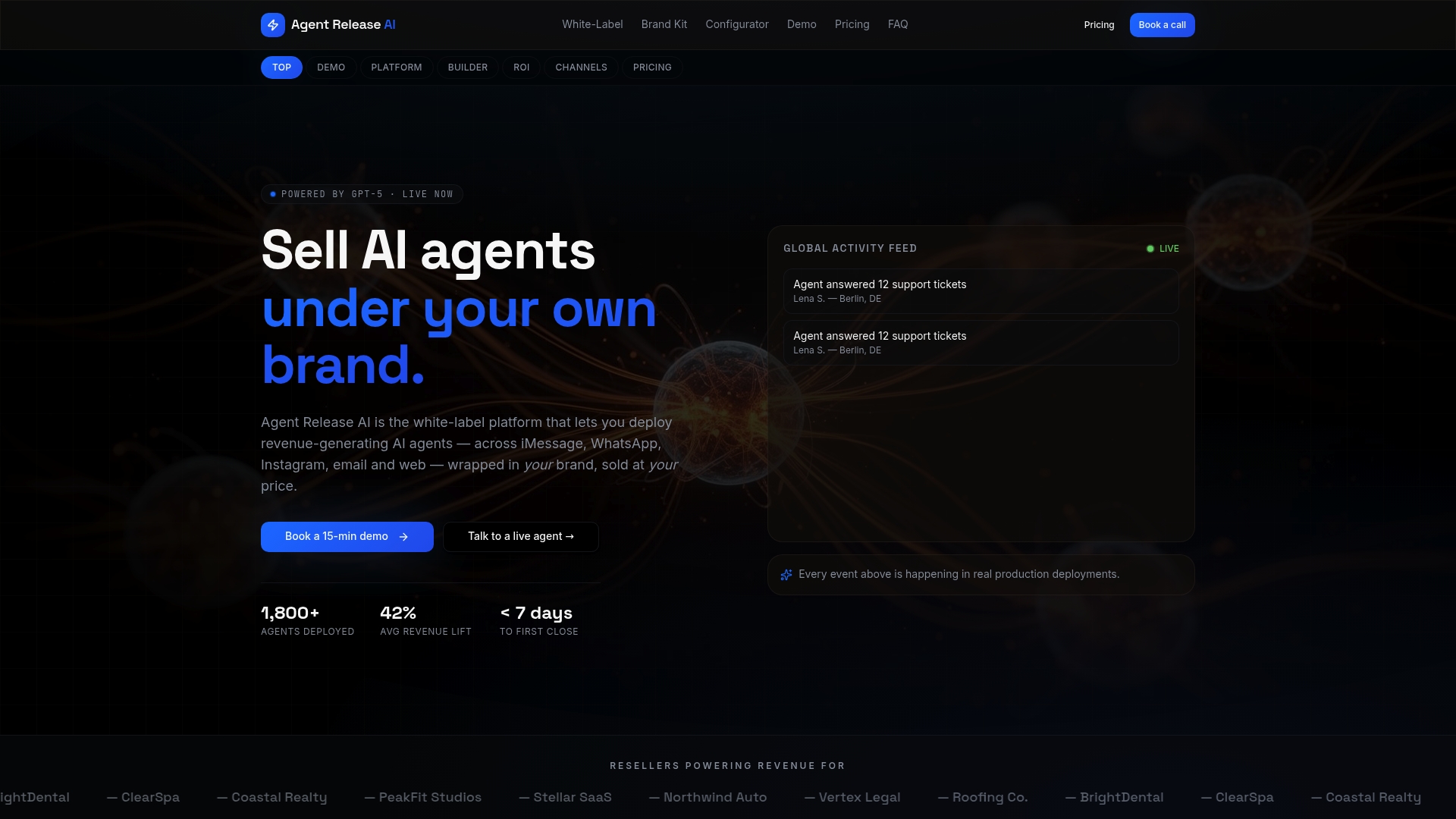
Deployment typically takes under a week, and unlimited tenant creation means you can spin up a branded instance for every client. Server-side revenue tracking gives you the attribution data to show clients exactly what their agent generated, which helps with renewal conversations.
If you want to see how a branded agent would look for your first client, try the white-label configurator and build one out before you commit to anything.
Where this article’s claims come from
The process definitions and time-savings figures in this piece draw on ZoomInfo’s explainer on automated lead qualification, while the case for explainable scoring comes from Clay’s analysis of AI lead qualification. Implementation timing and retraining guidance reference HubSpot’s AI scoring documentation and Conversion’s lead scoring product page, both useful if you want to go deeper on pilot design.
Sources
- What Is Automated Lead Qualification? — ZoomInfo pipeline
- Lead qualification: how AI can help — Clay blog
- Build lead scores with AI — HubSpot knowledgebase
- AI lead scoring — Conversion (product page)
FAQ
How do you use AI for lead qualification?
Connect your capture points (forms, chat, messaging channels) to an AI scoring tool, let it enrich and score each lead against your ideal customer profile, then route high-scoring leads to reps automatically while lower scores go to nurture sequences.
What is the 30% rule in AI?
There’s no single standardised “30% rule” tied to AI lead qualification specifically; definitions of this term vary across different AI contexts, so treat any exact figure you see attached to it with caution.
How much do qualified leads cost?
Cost per qualified lead varies enormously by industry, channel, and how tight your ICP definition is, so there’s no universal figure. It’s more useful to track your own cost-per-qualified-lead before and after automation than to benchmark against an industry-wide average.
Is lead generation a good career?
Lead generation and lead qualification roles remain in demand as more companies adopt automated scoring and need people to manage, interpret, and refine those systems, particularly as agencies build out reseller offerings around white-label AI agents like those on the Agentrelease platform.
How is agentic AI different from a basic lead scoring tool?
A basic scoring tool assigns a number and stops there. Agentic AI acts on that score by booking meetings, drafting messages, and updating your CRM automatically, closing the gap between “qualified” and “contacted” without manual intervention.